





























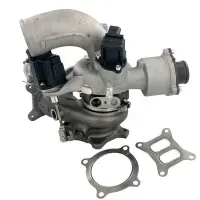















































































Reconditioned or Used Turbochargers – Which Turbo Should You Choose?
If your vehicle has a faulty turbocharger, one of the first decisions is whether to buy a new, used, or reconditioned turbocharger. The price difference can be significant, but purchase price should not be the only factor when choosing a turbo.
Turbochargers operate at extremely high speeds and temperatures, so even minor internal wear, incorrect balancing, or hidden damage can significantly reduce their service life.
That is why it is important to understand the difference between a used, repaired, and professionally reconditioned turbocharger before making a purchase.
Used turbochargers – lower price, but unknown history
A used turbocharger is usually removed from another vehicle and sold without being completely disassembled or professionally reconditioned.
The price of a used turbo can be attractive, but the main risk is its unknown service history. In many cases, the buyer does not know how the turbocharger was previously used or what condition its internal components are in.
A used turbocharger may previously have suffered from:
- insufficient lubrication or oil starvation;
- poor-quality or contaminated engine oil;
- overheating;
- excessive boost pressure;
- foreign object damage;
- long-term wear of bearings, shaft, or other internal components.
Some of these problems may not be visible from the outside. A turbocharger may initially appear to work normally, but after a short period of use it may develop oil leaks, noise, insufficient boost pressure, or other faults.
Therefore, buying a used turbocharger from an unknown source may offer a lower initial price, but it can also involve a higher risk of additional repair costs later.
What is a repaired turbocharger?
The term “repaired turbocharger” can describe very different levels of repair.
In a basic repair, the turbocharger may simply be disassembled and cleaned, while only the obviously damaged components are replaced.
Such a turbocharger may operate correctly, but its quality depends heavily on the spare parts used, the quality of diagnostics, balancing, adjustment, and final testing.
If worn components are reused without sufficient inspection, there is a risk that they may later cause another turbocharger failure.
What is a professionally reconditioned or remanufactured turbocharger?
Professional turbocharger reconditioning is a much more comprehensive process than simply replacing one damaged component.
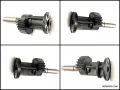
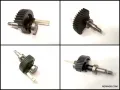
The turbocharger is completely disassembled, cleaned, and inspected. Worn parts are replaced, while reusable components are carefully checked and measured.
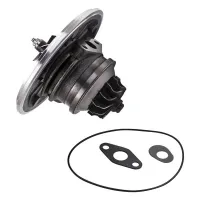
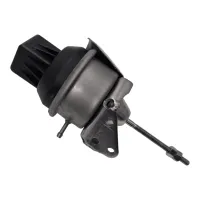
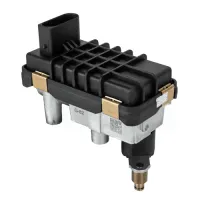
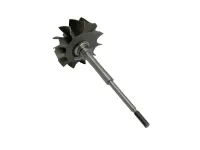
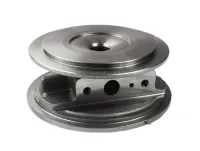
Particular attention is given to CHRA balancing, variable geometry adjustment, and actuator operation.
After assembly, the turbocharger is tested using specialized equipment to verify its operating parameters before it is shipped to the customer or installed in the vehicle.
How is a turbocharger reconditioned?
1. Initial diagnostics
The process begins with an external and technical inspection of the turbocharger. Specialists assess the housings, compressor and turbine wheels, shaft play, bearings, actuator, and other components.
2. Complete disassembly
The turbocharger is fully dismantled so that both visible and internal components can be properly inspected.
3. Cleaning of components
Housings and other reusable components are cleaned of oil, soot, corrosion, and other deposits using suitable cleaning methods and equipment.
4. Inspection and measurement
After cleaning, the technical condition, wear, and possible damage of the components are checked. Parts that do not meet the required standards are not reused.
5. Replacement of worn components
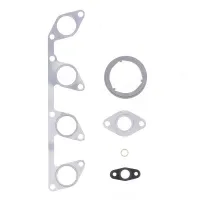
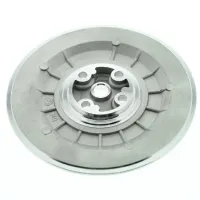
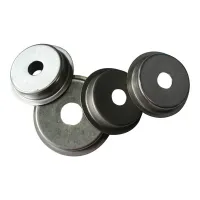
Depending on the turbocharger design and technical condition, the necessary bearings, seals, washers, and other worn or damaged components are replaced.
6. CHRA balancing and turbocharger adjustment
One of the most important stages of reconditioning is balancing the rotating assembly. During operation, the turbocharger rotor can reach extremely high rotational speeds, so even a small imbalance can cause vibration and premature component wear.
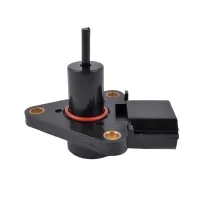
Depending on the turbocharger type, the variable geometry system and actuator are also adjusted and calibrated.
7. Final testing and quality control
After assembly, the turbocharger is tested using specialized equipment. Depending on the turbocharger design, the required operating, airflow, adjustment, and vibration parameters are checked.
Only after successfully passing the final inspection is the reconditioned turbocharger ready for installation.
Used vs reconditioned turbocharger – key differences
| Comparison | Used Turbocharger | Reconditioned Turbocharger |
|---|---|---|
| Service history | Often unknown | Technical condition is inspected |
| Complete disassembly | Usually no | Yes |
| Internal component inspection | Limited or not performed | Yes |
| Replacement of worn parts | Usually no | Yes, as required |
| CHRA balancing | Usually no | Yes |
| Adjustment and testing | Usually limited | Professional testing |
| Warranty | Depends on the seller | Warranty according to the seller’s terms |
Why choose a professionally reconditioned turbocharger?
Tested quality and warranty
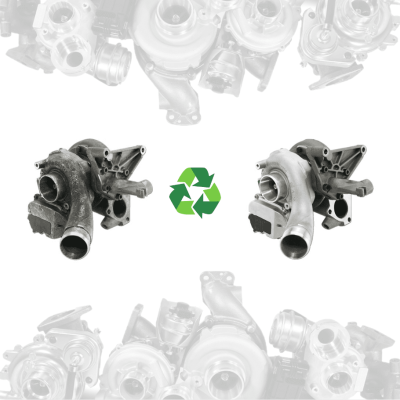
Unlike a used turbocharger of unknown origin, a professionally reconditioned turbocharger is disassembled, inspected, rebuilt, balanced, and tested.
NERINGS reconditioned turbochargers are supplied with a warranty according to the warranty conditions of the specific product.
Lower cost compared with a new turbocharger
In many cases, a professionally reconditioned turbocharger can be significantly more economical than a completely new original turbocharger.
At the same time, the customer receives an inspected and tested product rather than a used turbocharger with an unknown history.
A more sustainable solution
During the reconditioning process, technically suitable turbocharger housings and other components can be reused. This reduces the need to manufacture a completely new unit and helps reduce material consumption.
Wide range of turbochargers and spare parts
NERINGS offers turbochargers and turbocharger spare parts for passenger cars, commercial vehicles, trucks, and other machinery.
Our specialists can help identify the correct turbocharger using the turbo part number, OEM number, vehicle details, or VIN.
Which turbocharger should you choose?
If the lowest purchase price is your only priority, a used turbocharger may initially seem attractive. However, its unknown wear, service history, and possible hidden defects should also be taken into account.
A professionally reconditioned turbocharger offers a balance between price, technical quality, and reliability because its key components are inspected, necessary parts are replaced, and the complete unit is balanced and tested.
If your turbocharger is damaged, before purchasing a used unit of unknown origin, check whether a professionally reconditioned turbocharger is available or whether your existing turbocharger can be rebuilt.
Contact the NERINGS specialists or find the required turbocharger in our online store.